
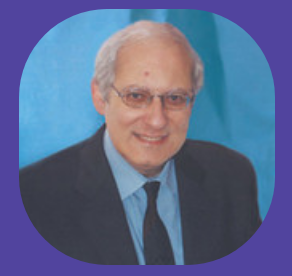
At the invitation of the School of Transportation Science and Engineering and the Office of International Cooperation, Professor Alberto Carpinteri will visit Harbin Institute of Technology for academic exchange. During his visit, he will deliver a lecture as part of the HIT International Master Forum. Faculty members and researchers interested in fracture mechanics, seismic precursors, and advanced materials are cordially welcome to attend.
Time: 14:00-16:00, April 24, 2026
Venue: Room 1105, School of Transportation Science and Engineering
Title: Fracto-Emissions as Seismic Precursors
Biography
Professor of Polytechnic University of Turin, Fellow of European Academy of Sciences, Fellow of the International Academy of Engineering, Fellow of Academia Europea, Fellow of European Academy of Sciences and Arts, Academician of the Academy of Sciences of Turin, and Life Fellow of the American Society of Civil Engineers, Chair Professor of HIT. With decades of in-depth research spanning fracture mechanics, concrete structures, seismic precursor monitoring, and mechanics of advanced materials, he has produced original contributions that have set the international frontier in his fields. He holds an H-index of 94, with over 36,000 total citations, and has authored more than 1,000 academic publications and 59 books. His outstanding achievements have been recognized with numerous top-tier international honors, including the Paul Paris Gold Medal from the International Conference on Fracture and the ASTM George Irwin Medal. Combining profound scholarly expertise with extensive international leadership experience, he has long been dedicated to fostering global academic exchange and advancing engineering technology innovation, and is widely regarded as a core figure in promoting the internationalization and high-level development of structural engineering.
Abstract
This lecture introduces frontier research on fracto-emissions as seismic precursors. It points out that during nanoscale mechanical instabilities—such as fracture in solids and cavitation in fluids—terahertz phonons are generated, with frequencies approaching the Debye frequency of atomic lattices and energies comparable to those of thermal neutrons. Rock fracture experiments and seismic monitoring have confirmed that terahertz phonons can induce fission in medium-atomic-weight elements such as iron and calcium, accompanied by neutron and alpha-particle emissions. This mechanism may provide new explanations for long-standing scientific challenges, including Earth's evolution, cold fusion, and radiocarbon dating. Three forms of fracto-emission energy are identified as seismic precursors: at the tectonic scale, acoustic emission predominates; at the mesoscopic scale, electromagnetic emission predominates; and at the nanoscale, neutron emission predominates. These three precursors emerge in a temporally ordered sequence prior to earthquakes: neutron emission, associated with microcracking and high-frequency signals, appears approximately one week before the event; electromagnetic emission, corresponding to longer cracks, appears 3–4 days prior; and acoustic emission, linked to low-frequency signals, emerges about one day in advance. Six years of continuous observation demonstrate that the peak activities of the three types of fracto-emissions are highly correlated with strong earthquakes in the monitored region.
